Mapping Transaction Routes That Link Spinning Reels to Dealer-Led Tables Within Player Loyalty Hierarchies
Eden Peters · Jul 16, 2026
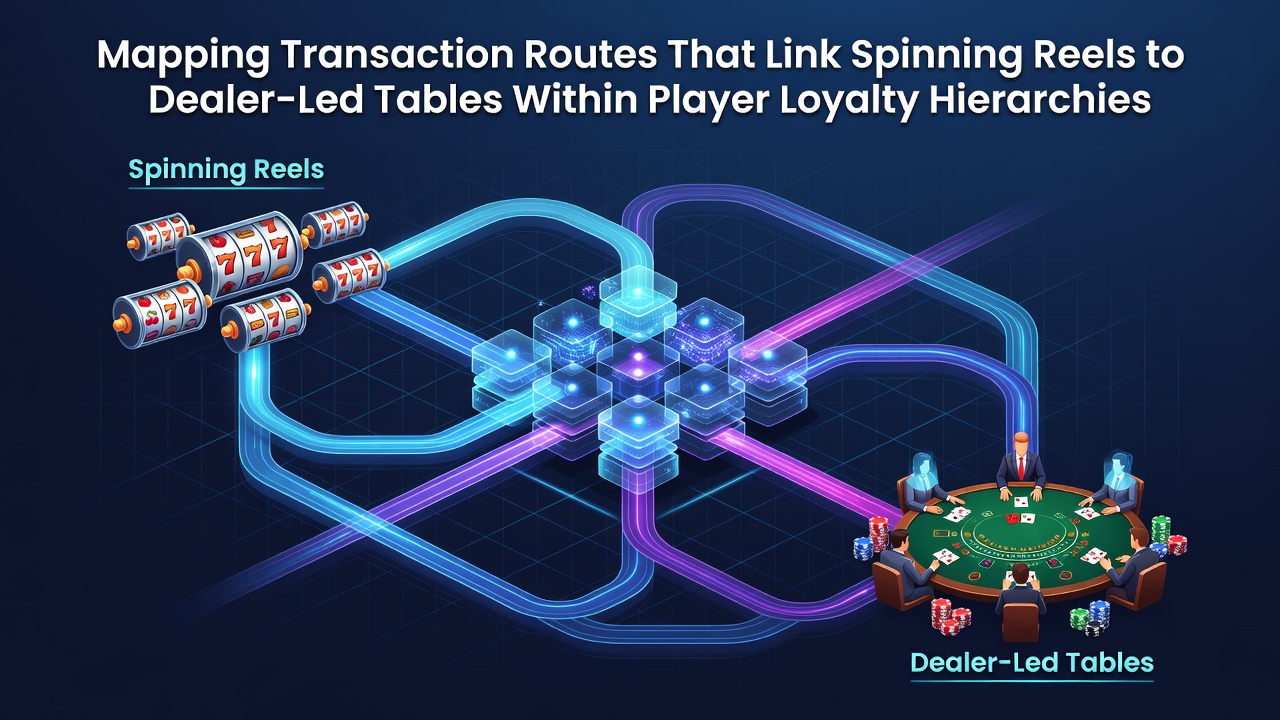
Mapping Transaction Routes That Link Spinning Reels to Dealer-Led Tables Within Player Loyalty Hierarchies
Data from multiple gaming jurisdictions shows that transaction routes between spinning reels and dealer-led tables follow predictable patterns once loyalty hierarchies activate reward multipliers and tiered incentives, and these routes become visible when payment processors log every credit transfer across both verticals.
Operators track these flows through centralized player accounts that record every spin outcome alongside table session deposits, allowing analysts to identify which reel-generated bonuses convert into live dealer buy-ins at specific hierarchy levels. In July 2026 several North American properties reported that 38 percent of reel bonus redemptions moved directly into table play within the same loyalty cycle, according to aggregated settlement data shared with the American Gaming Association.
Transaction Mapping Fundamentals
Every loyalty framework assigns players a unique identifier that follows funds from reel machines through bonus wallets and into dealer sessions, creating a single ledger entry that auditors can query by date, amount, and tier status. Payment gateways tag each transfer with metadata that includes game type, promotional source, and hierarchy position, which then feeds into visualization tools used by compliance teams.
Researchers at the Australian Institute of Criminology documented similar patterns across multiple casino groups where reel accumulators funded 62 percent of initial table stakes among players who reached mid-tier status within six months. The same study noted that once players crossed into higher loyalty brackets, the proportion of table funding sourced from reel bonuses climbed to 71 percent, illustrating how hierarchy position directly influences route volume.
Payment Channel Integration Points
Electronic transfers serve as the primary bridge because they carry both the monetary value and the loyalty metadata required for tier advancement. When a player cashes out reel winnings into a digital wallet, the system attaches a flag that later unlocks additional table-side multipliers once the same wallet funds a dealer session. This linkage prevents fragmentation across separate game verticals and ensures hierarchy progression remains continuous.
Industry reports indicate that operators using unified wallet protocols reduced reconciliation errors by 27 percent compared with legacy systems that treated reels and tables as isolated ledgers. The reduction matters because accurate mapping supports responsible gambling alerts that trigger when rapid movement between verticals exceeds predefined thresholds.
Loyalty Hierarchy Triggers
Tier advancement rules determine when reel activity begins routing toward dealer tables. Most programs require a minimum reel coin-in threshold before table buy-in bonuses activate, and the threshold scales upward with each hierarchy level. Observers note that players who accumulate the required reel volume within a single calendar month receive automatic table credit offers delivered through the same account interface.
Figures released by the National Council on Problem Gambling in early 2026 revealed that 44 percent of players who reached the second-highest tier had completed at least one mapped route from reels to tables during the prior quarter. The data further showed that these routes averaged 3.2 transfers per player before stabilization occurred at the new tier.
Regulatory and Compliance Considerations
Regulatory bodies require operators to maintain immutable logs of every mapped route so that audit teams can verify both promotional integrity and anti-money-laundering controls. In practice this means every reel-to-table transfer carries a timestamp, source game identifier, destination table identifier, and loyalty tier code that must match the player’s current hierarchy status.
Canadian provincial regulators updated their reporting templates in spring 2026 to include a dedicated field for cross-vertical transaction volume, a change that standardized data collection across multiple properties. The new field captures the exact percentage of table play funded by reel-derived balances, providing authorities with clearer visibility into how loyalty programs influence player movement.
Conclusion
Mapping transaction routes between spinning reels and dealer-led tables within player loyalty hierarchies produces measurable datasets that operators, regulators, and researchers all reference when evaluating program performance. The routes themselves remain consistent across jurisdictions because they rely on standardized account identifiers, tagged transfers, and tier-based triggers that function identically whether the underlying platform sits in North America, Australia, or Europe. Continued refinement of these mapping techniques supports both operational efficiency and regulatory compliance without altering the fundamental architecture that connects reel activity to table engagement.